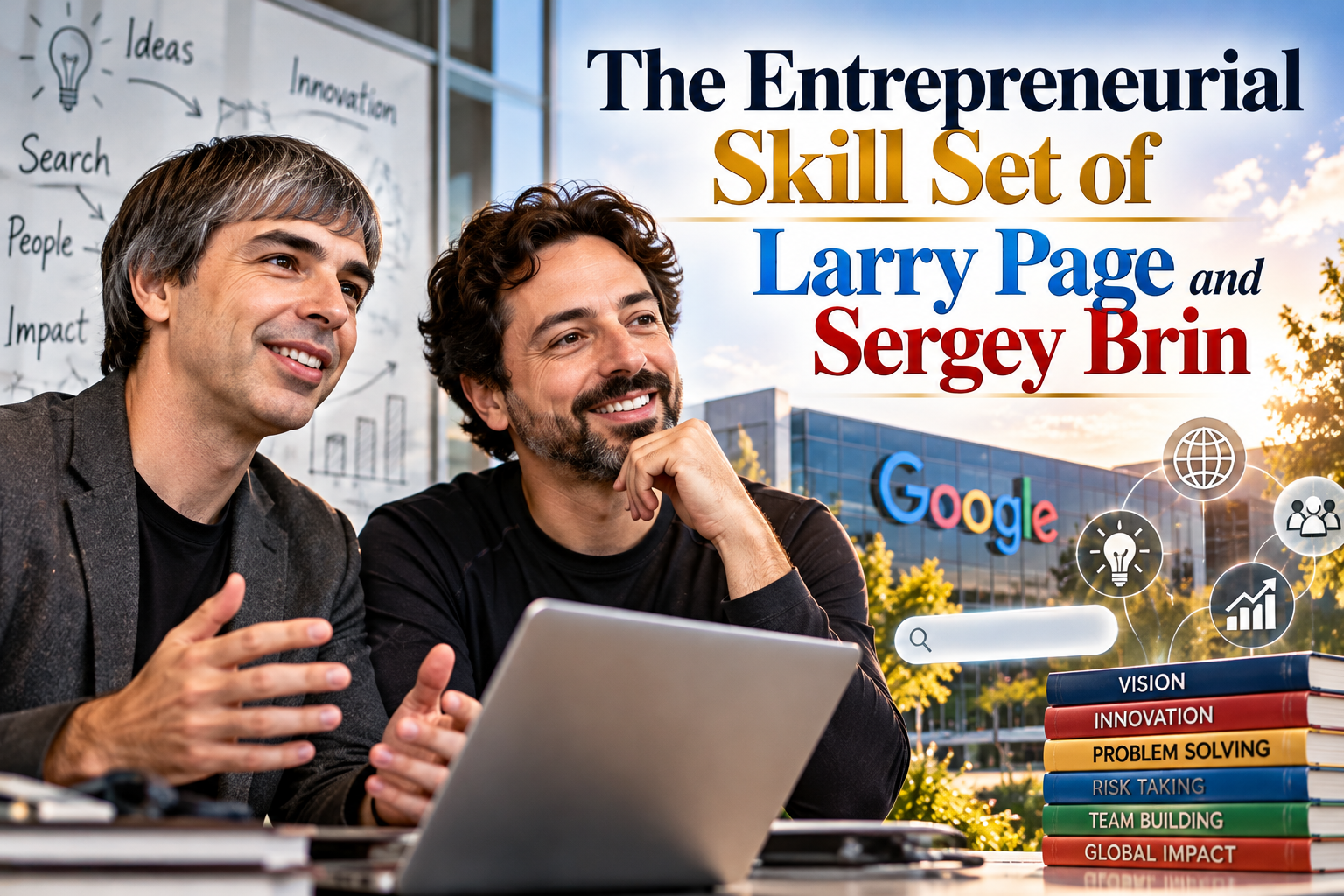
 Larry Page and Sergey Brin, co-founders of Google, are two of the most influential entrepreneurs of the modern age. Their journey from Stanford University to creating one of the most powerful technology companies globally is a testament to their unique skill set. Their abilities not only highlight technical genius but also entrepreneurial acumen, foresight, and the ability to innovate continuously. Here’s an exploration of the key elements that contributed to their success.
Vision and Innovation
At the heart of Page and Brin’s entrepreneurial journey is their vision. Google was born out of a simple yet profound idea: to organize the world’s information and make it universally accessible and useful. This vision was both ambitious and forward-thinking, recognizing the potential of the internet when it was still in its infancy.
Innovation is another critical aspect of their skill set. The creation of the PageRank algorithm was revolutionary. It changed how search engines ranked web pages, prioritizing relevance and interconnectivity. This technical innovation set Google apart from other search engines of the time, such as Yahoo and AltaVista, which relied on keyword frequency.
Technical Expertise
Both Page and Brin are computer scientists with a deep understanding of algorithms, programming, and data structures. This technical foundation enabled them to develop Google’s core technology personally. Having a hands-on approach allowed them to innovate rapidly, optimize functionality, and maintain quality control during the critical early phases of Google’s development.
Their technical skills also meant they understood the importance of scalable architecture. From the outset, Google was designed to handle vast amounts of data efficiently, a foresight that enabled the company to grow without being bogged down by technical debt.
Risk Taking and Resilience
No successful entrepreneur avoids risk, and Page and Brin are no exceptions. They took significant personal and professional risks in the early days of Google. At a time when they could have pursued safer options, they instead chose to invest in their startup, even when the path was uncertain. They risked personal finances and career security, believing in their vision’s potential.
Resilience is closely tied to risk-taking. The tech industry is notorious for its rapid pace and high failure rate. Page and Brin faced numerous challenges, from funding hurdles to competitive pressures. Their ability to remain focused and committed, adapting to obstacles without losing sight of their ultimate goals, exemplifies their resilience.
Strategic Thinking
A crucial element of their success is strategic thinking. They understood the importance of creating a sustainable business model early on. Google’s advertising system, AdWords, revolutionized online advertising by allowing businesses to reach targeted demographics effectively. This strategic decision not only generated substantial revenue but also created immense value for clients.
Furthermore, their strategic acquisitions, like YouTube and Android, expanded Google’s ecosystem and fortified its market position. These decisions were rooted in foresight and an understanding of market trends and user needs.
Leadership and Company Culture
Page and Brin have also demonstrated exceptional leadership. They cultivated a unique company culture at Google, prioritizing creativity, collaboration, and continuous learning. The famous “20% time” policy, encouraging employees to spend a portion of their work hours on projects of personal interest, fostered innovation.
Their leadership style has been characterized by openness and approachability, maintaining flat hierarchies to encourage communication. They empowered their team, trusting in their abilities and fostering an environment where new ideas could flourish.
Adaptability and Continuous Learning
The technology landscape is ever-changing, and being static can lead to obsolescence. Page and Brin have shown adaptability, steering Google through the shifting tides of the internet era. From desktop search to mobile and voice-activated technologies, they have continually adapted their strategies.
Continuous learning has been a cornerstone of their approach. Both individually, and as a company, Google has consistently engaged in research and development, embracing new technologies like artificial intelligence and cloud computing. This openness to learning ensures they remain at the cutting edge of technological innovation.
Customer-Centric Focus
Page and Brin emphasized a user-first philosophy, focusing on delivering the best possible experience. From the simplicity of Google’s homepage to the relevance of its search results, the user experience has been paramount. This focus differentiated Google from competitors who were cluttered with advertisements, contributing to user loyalty and brand strength.
Additionally, their approach to data-driven decision-making ensured that Google’s services continually improved based on user feedback and behavioral data. This focus on the end-user has been vital in maintaining Google’s dominant position.
Philanthropy and Social Responsibility
Beyond their entrepreneurial successes, Page and Brin recognize their responsibility to broader social issues. The establishment of Google.org reflects their commitment to leveraging technology for social impact. Their endeavors highlight an awareness of the societal implications of their innovations and a desire to contribute positively.
Conclusion
Larry Page and Sergey Brin embody the essence of successful entrepreneurship. Through vision and innovation, technical mastery, resilience, strategic acumen, and a user-centric approach, they transformed Google from a university project into a global powerhouse. Their journey offers valuable insights into the skill set required to navigate and succeed in the technology industry.
Their success underscores the importance of balancing technical expertise with strategic vision, risk-taking with resilience, and innovation with user-centric thinking. As the world continues to evolve, the entrepreneurial principles demonstrated by Page and Brin remain as relevant as ever, offering guidance and inspiration to the next generation of innovators.